• About WordPress
    • About WordPress
    • Get Involved
    • WordPress.org
    • Documentation
    • Learn WordPress
    • Support
    • Feedback
  • Log In
  • Register
  • Skip to primary navigation
  • Skip to main content

Modern Latin America 2020

History 216

  • Home
  • About
  • Schedule
  • Assignments
    • Digital Timeline
    • Research Project
      • Prospectus
      • Secondary Source Critique
      • Pecha Kucha
      • Research Essay
    • LA in the News
    • Class Notes Blog Post
    • Handouts
  • Readings
    • Additional Readings
  • Policies & Responsibilities
  • Contact

Peyton O'Laughlin

Motorcycle Diaries Blog Post

Peyton O’Laughlin

Question: How does Guevara view the economic and health implications of various occupations during his travels?

Answer: I think Guevara often views the health implications that many Latin Americans face being in direct relation to their long hours and low wages. Examples of this ideology are present in how he describes the mining process in Chile, always detailing the labor as excruciating due to its inherently rough physical work and the environmental climate of the mountains. Likewise, the living conditions conflated with this type of work is always described as poor. Equally, Guevara highlights the economic factors that play into health by exemplifying the waitress he meets in Chile. As a doctor, Guevara is keen on the fact that the waitress has a heart condition but she does not seek medical help because she either cannot afford to miss work or cannot afford medical attention. Later, when Guevara is recanting his time in Chile, he describes the condition of many Chilean hospitals and describes them as filthy and not well maintained with lacking amount of medicine, equipment, and funding. Furthermore, some of the pricing for medical attention can cost from 300 to 500 Chilean escudos, which is said to be “legalized theft.” In sum, Guevara highlights these situations in his writings because they are of importance to Latin American power structures. The income inequalities and poor working conditions only add to rampant health problems. Likewise, these issues tie into years of economic subordination to foreign influences bent on economic control.

March 1, 2020

Filed Under: Motorcycle Diaries

Class Notes 02/17/2020

Peyton O’Laughlin

Firstly, Giovanny discussed the Venezuelan migrant crisis. Important highlights of this project were xenophobia that accompanies mass migration incidents as well as the political and economic factors that occur from this situation. Through this news event, Giovanny called upon the theme of “Americanos” and nativism during the Latin American wars of independence in comparison to rhetoric regarding the Venezuelan migrant crisis, “Somos planas.” 

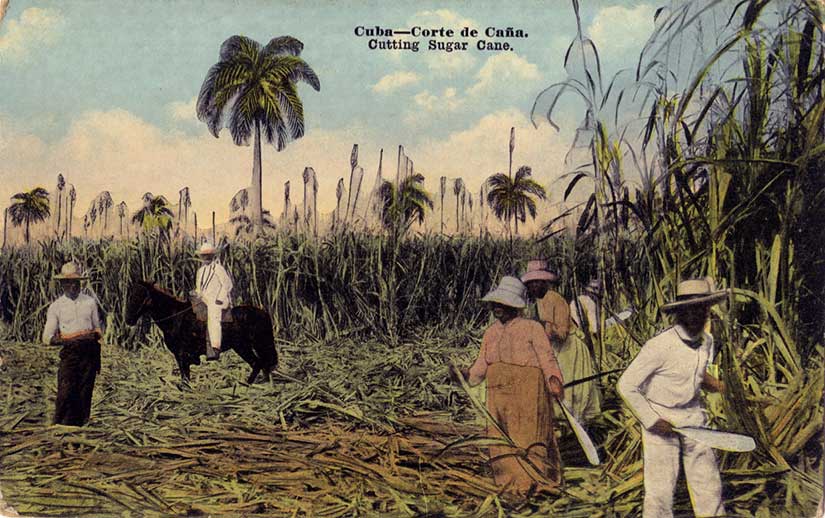
Next, we narrowed our historical focus to neocolonialism in Latin America from the late 19th century to the Great Depression. The main topic of focus was defining neocolonialism and how this historical facet affected the lives of Latin American people. A large portion of the class revolved around examining photos of Latin American workers under neocolonial as primary sources. Importantly, this activity provided us to think critically about the cultural, political, and economic factors that shaped the lives of Latin American people during this period. Not only were Latin American people affected, but their economic structures were altered due to foreign influence. Likewise, Latin America experienced a large influx of European immigrants, this resulted in continued cultural changes and a shift in political ideologies, liberalism to consolidated authority and oligarchies. Finally, through the photos, we discussed familial, socio-economic, and racial dynamics of the world of work, mainly agricultural, in Latin America during the period. This last piece of the class was largely developed through observations of clothing, how individuals were placed in photos, the type of work that was being represented, racial tones, types of agricultural or natural resources, and the locations the photo presented. 

In terms of understanding neocolonialism, from the neocolonizers perspective, one can take precedence from Woodrow Wilson’s Mobile Speech (1913). Through Wilson’s speech, one can observe the views and sentiments of the United States towards Latin American countries under neocolonialism. Wilson details how Latin American countries were apt to foreign, mainly the United States, the influence due to their lack of industrial development. Latin American countries vied outside the limits of utility to the world economy and this ideology was the justification for imperialized invasion and economic control by the United States during neocolonialism. 

Key terms 

  • Neocolonialism: the use of economic, political, cultural, or other pressures to control or influence other countries, especially former dependencies. 
  • Oligarchy: a small group of people having control of a country, organization, or institution. 
  • Debt Peonage: a system where an employer controls the physical and economic mobility of a worker by limiting their access to supplies not sold by the owner which results in a burden of debt to the worker. 

Reputable Sources 

  • https://www.iep.utm.edu/neocolon/ 
  • The Emergence of the Neocolonial Order (1850-1880): John Charles Chasteen 
  • http://www.alternautas.net/blog/2015/11/5/strategic-ethnicity-nation-and-neocolonialism-in-latin-america 

Questions 

  • What was the justification for the economic intervention of Latin America by foreign influences? 
  • Briefly describe the system of Debt Peonage. 
  • Explain why a Latin American country under neocolonial rule would produce low-cost exports? 
Image result for latin america colonialism political cartoon
The Ones Who Began It: The Spanish-American War of 1898 (Part 2)

February 18, 2020

Filed Under: Class Notes

Latin America In The News: Death and Butterflies